This site is not supported by your current browser.
Please use one of these browsers.


NH₃ Removal Systems
The GraniteFuel NH₃ Removal System is designed to eliminate ammonia (NH₃) and amine compounds from raw biogas prior to upgrading.
Description
NH₃ Removal Systems for Stable Biogas and RNG Upgrading Performance
The GraniteFuel NH₃ Removal System is designed to eliminate ammonia (NH₃) and amine compounds from raw biogas prior to upgrading. Ammonia is a corrosive contaminant that can damage heat exchangers, compressors, and membrane materials while forming salt deposits that foul equipment and reduce plant
efficiency. By effectively capturing ammonia before it enters the compression and separation stages, GraniteFuel’s system protects critical assets and ensures consistent gas quality for renewable natural gas (RNG) production.
Each NH₃ Removal System is engineered to meet site-specific gas characteristics and treatment goals. Whether installed in agricultural digesters, wastewater treatment facilities, or landfill gas upgrading plants, the system provides reliable ammonia reduction with minimal maintenance. This stability improves downstream system performance and contributes to longer equipment life and cleaner, higher-value RNG output.
Key Features and Benefits of the NH₃ Removal System
Effective Ammonia and Amine Capture
The system removes both free ammonia and amine compounds that are commonly present in digester and wastewater biogas streams. This prevents the formation of ammonium salts, which can block valves and corrode metal surfaces.
Custom Media Formulation and Vessel Configuration
GraniteFuel selects the most effective adsorbent or catalytic media for each application based on inlet concentration, gas temperature, and flow rate. Vessel sizing and flow distribution are optimized to maintain low outlet concentrations and long service intervals.
Continuous-duty, Low-maintenance Operation
The NH₃ Removal System is designed for continuous operation with minimal operator intervention. Long media life and easy replacement access reduce downtime, allowing for efficient and predictable plant performance.
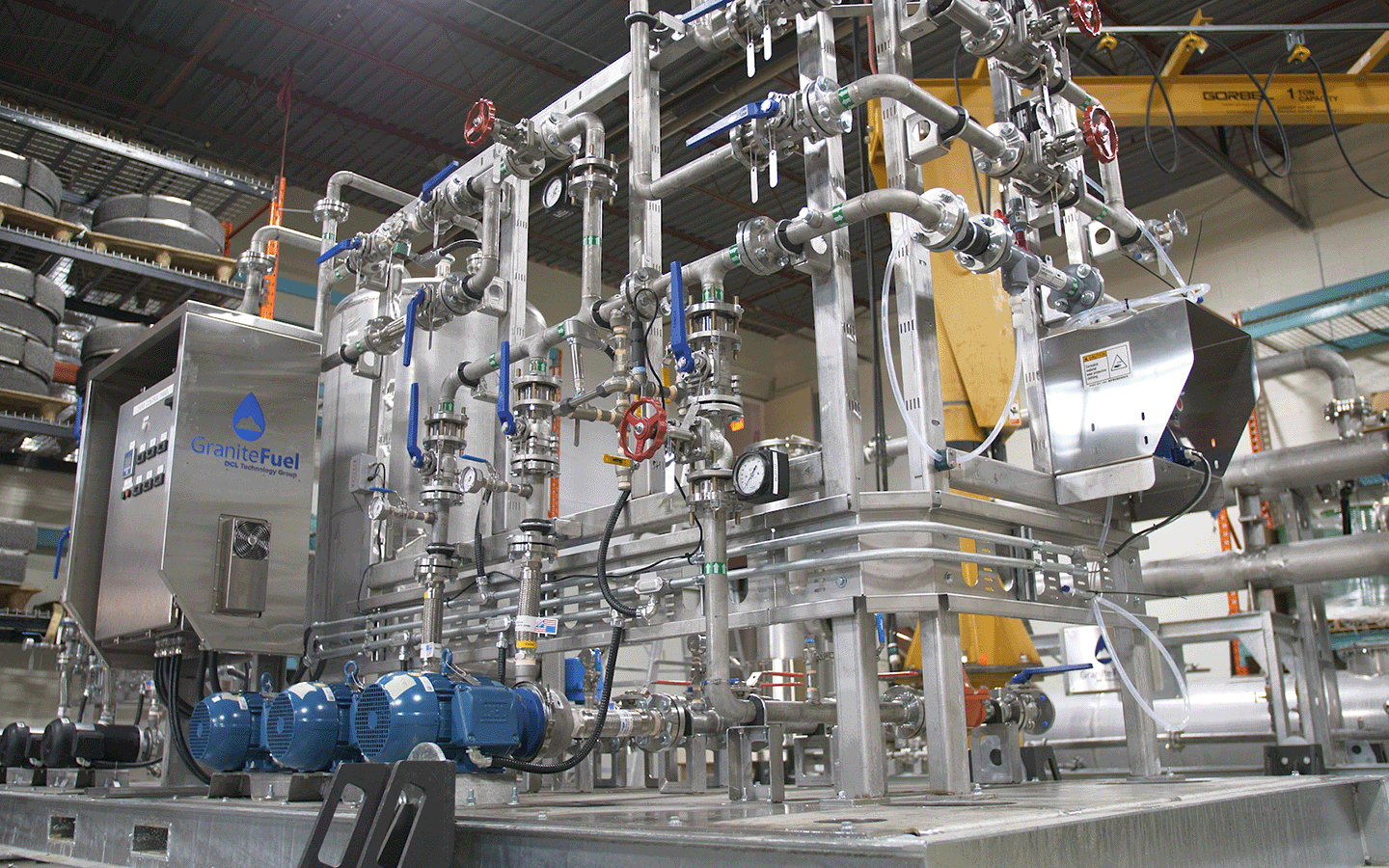
Compact, Modular Skid Design
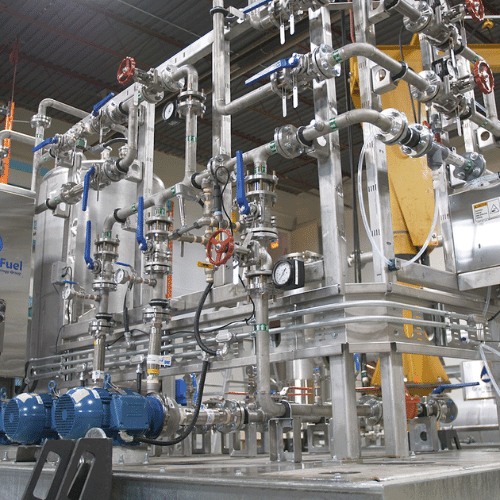
The integrated skid layout minimizes installation time and footprint while simplifying service access. Each system can be installed as a standalone module or combined with GraniteFuel’s other conditioning technologies for a complete turnkey solution.
Corrosion-resistant Materials and Construction
All wetted components are built from stainless steel or chemically resistant alloys suited to the corrosive environments of digesters and wastewater applications. The robust design ensures long-term reliability under demanding conditions.
Seamless System Integration
The NH₃ Removal System integrates with Dehydration, H₂S Removal, and VOC/Siloxane Removal Systems to form a unified biogas conditioning package that supports consistent and efficient RNG upgrading.
NH₃ Removal System Applications in Biogas and RNG Projects
Agricultural Biogas and Farm Digesters
Ammonia is produced during the anaerobic digestion of nitrogen-rich organic waste. The NH₃ Removal System captures this contaminant to protect compressors and upgrading membranes from salt formation and corrosion. Reliable ammonia control helps operators maintain steady methane recovery and achieve higher RNG purity levels.
Wastewater Treatment and Municipal Facilities
Wastewater biogas streams often contain significant ammonia concentrations from protein degradation. GraniteFuel’s NH₃ Removal System prevents these contaminants from damaging heat exchangers and downstream media. This leads to improved system uptime, reduced maintenance, and lower operational cost for municipal RNG projects.
Landfill Gas Conditioning and Recovery
Although ammonia levels in landfill gas are typically lower, the compound can still cause corrosion and performance issues in upgrading systems. The NH₃ Removal System provides an added layer of protection to maintain gas consistency and safeguard catalysts or membranes used in the upgrading process.
Each system is customized to match inlet composition, flow rate, and environmental conditions, ensuring efficient ammonia removal across a broad range of biogas applications.
Integration with Other GraniteFuel Systems
The NH₃ Removal System is part of GraniteFuel’s complete conditioning platform. It typically follows the H₂S Removal System and can be paired with the VOC/Siloxane Removal System for comprehensive gas cleanup before upgrading. The purified gas then proceeds to the Compression and Gas Separation Systems for methane concentration and polishing.
All systems share common instrumentation and control logic for unified monitoring and data collection. This ensures consistent process control and simplifies integration into existing plant automation infrastructure.
For more information, please visit our website.